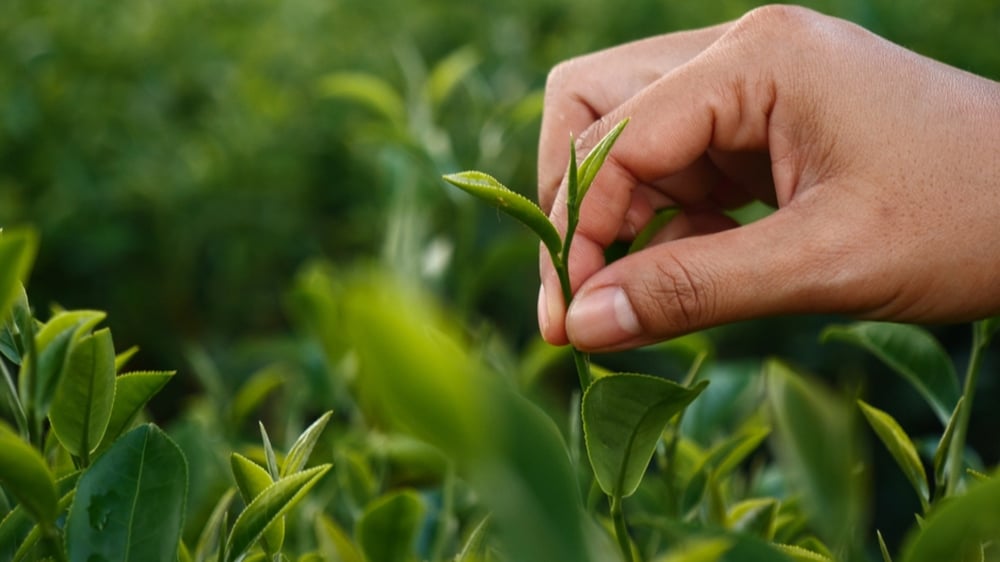
The global tea industry is a thriving sector, marked by a rich history and significant economic impact.
Global tea production now exceeds USD 17 billion annually, while tea trade is valued at USD 9.5 billion.
Countries like China, India, Sri Lanka, and Kenya have long been major players in both tea production and trade. Recently, Dubai has emerged as a crucial player in the global tea trade, driven by the strategic initiatives of the DMCC Tea Centre. This represents a substantial source of export revenue for low-income and emerging economies.
Key Trade Hubs in the Global Tea Industry
The global tea trade is supported by several key trading hubs, each with unique roles and contributions that collectively sustain and grow the market. China, India, Sri Lanka and Kenya are the most significant tea-producing countries, representing 75% of world production. Each of these countries has developed a robust tea industry with distinct characteristics.
1. China
China is the world's largest tea producer. In 2023, China produced over three million metric tons of tea, accounting for nearly half of the global tea production. China specialises in producing green tea and is the largest green tea-producing country. It has a rich tea culture dating back thousands of years, and its production includes a wide variety of teas, such as green, black, oolong, white, and pu-erh. China's tea industry is characterised by its diverse range of high-quality teas, catering to both domestic and international markets.
Operational Characteristics:
- Production Diversity: China produces all major types of tea, offering a vast array of flavours and qualities.
- Traditional Methods: Many teas are still produced using traditional methods, which are highly valued in the market.
- Export Strategy: China exports a significant portion of its tea, focusing on high-value markets in Europe and North America.
2. India
India, the second-largest tea producer globally, produced 990,240 metric tons of tea between January and September 2023 and 913,510 metric tons during the same period in 2024. It is known for its iconic tea varieties, such as Assam, Darjeeling, and Nilgiri. Most of the tea exported from India is black tea, accounting for approximately 96% of total exports. The Indian industry plays a crucial role in the global market by providing a steady supply of robust and flavourful blends
Operational Characteristics:
- Large-Scale Production: India’s tea estates are extensive, particularly in Assam and Darjeeling, which are recognised for their distinctive flavours.
- Domestic Consumption: A significant portion of India’s tea production is consumed domestically, making it one of the largest tea-consuming countries.
- Global Export: India exports a considerable amount of tea, with major markets in Russia, the UK, and the Middle East.
3. Kenya
Kenya, Africa's largest tea producer and the third-largest globally, produced 318,340 metric tons of tea between January and July 2023, with production increasing to 364,211 metric tons during the same period in 2024. The highland regions of Kericho, Nandi, and Nyeri, with their mild climate and fertile volcanic soils, are the main centres of tea production.
Operational Characteristics:
- High Yield Production: Kenya’s tea plantations are highly productive, utilising modern agricultural techniques to maximise yield.
- Bulk Export: Kenya primarily exports black tea in bulk, which is used in blending for tea bags worldwide.
- Innovation: The industry is embracing innovations in tea processing and marketing to enhance quality and value.
4. Sri Lanka
Sri Lanka, renowned for its premium Ceylon tea, produced 262,159 metric tons of tea in 2024. The central highlands, particularly regions like Nuwara Eliya, Kandy, and Uva, are renowned for their distinctive tea profiles and are the primary areas for the country's tea production. The country’s tea industry is a major contributor to its economy, and Ceylon tea is celebrated for its unique flavour and high standards.
Operational Characteristics:
- Quality Focus: Sri Lanka emphasises the production of high-quality tea, often grown at high altitudes, which contributes to its distinct taste.
- Export-Driven: Most of Sri Lanka’s tea is exported, with key markets in the Middle East, Russia, and Europe.
- Sustainability: The industry is increasingly focusing on sustainable practices, including fair trade and organic production.
Tea Market Major Region’s Comparative Analysis
Production Diversity vs. Specialisation:
- China: China produces every type of tea, with green tea being particularly popular among local tea drinkers. The cultivation of tea is concentrated in the southeastern provinces, such as Fujian, Zhejiang, Yunnan, and Anhui, showcasing a broad diversity in production.
- India: India offers a wide range of tea varieties, including Darjeeling, Assam, Nilgiri, Kangra, Munnar, Dooars-Terai, Masala Tea, and Sikkim tea. This diverse production reflects India's ability to cater to both domestic and international markets with different tea profiles.
- Sri Lanka: Sri Lanka is predominantly known for its black tea, which it produces almost exclusively. The country's focus on black tea highlights its specialisation within the global tea market.
- Kenya: While Kenya is primarily a producer of black tea, it also produces other types, such as green tea, purple tea, and white tea. However, black tea remains the mainstay of its production, aligning with its role as a key supplier of this type of tea in the global market.
Traditional vs. Modern Methods:
- China: China’s traditional tea production methods are deeply rooted in cultural practices and are highly valued for the craftsmanship involved in tea processing and preparation.
- India: India balances both traditional and modern methods, with the Orthodox method producing higher-quality black tea, while the CTC method caters to mass production for teabags.
- Sri Lanka: Sri Lanka remains committed to the orthodox method, valuing the slow, deliberate process as essential for producing the best black tea.
- Kenya: Kenya employs modern agricultural techniques to maximise efficiency and yield, reflecting a more contemporary approach to tea production that ensures high-quality results.
Domestic vs. Export Markets:
- China: China's domestic tea market is much larger than its export market, with a domestic market worth $111.5 billion. This underscores the importance of tea consumption within the country, where tea is a cultural staple and widely consumed.
- India: India has a large and diverse domestic market, with over one billion kilograms of tea consumed in 2021, making it the world's largest tea-consuming country. Tea is available in every region of India, with informal vendors serving most of the working population. India primarily exports to the United Arab Emirates, Russia, Iran, the United States, and the United Kingdom.
- Sri Lanka: Sri Lanka is heavily export-oriented, with its main tea export destinations being Iraq, Russia, the United Arab Emirates, Iran, and Azerbaijan. The country’s tea export revenue reached Rs 140 billion in April 2023, marking a 58% increase from the same period in 2022, underscoring the significance of tea exports to its economy.
- Kenya: As of January 2024, Kenya exported 51.2 thousand metric tons of tea, highlighting its reliance on the international market. This high export percentage makes Kenya a critical player in the global tea trade, with black tea being the primary export.
Dubai's Strategic Advantages for Tea Trading
Dubai's emergence as a tea hub is fueled by several strategic advantages:
Geographical Connectivity: Dubai's location offers unparalleled logistical connectivity, making it a central node for tea trade between Asia, Africa, Europe, and the Americas. This strategic positioning allows for efficient distribution and access to key markets.
Trade Infrastructure: Dubai boasts state-of-the-art trade infrastructure, including world-class ports, the DMCC Tea Centre, and airports, which facilitate seamless import and export activities. This infrastructure supports the efficient handling of tea consignments, reducing transit times and costs.
Regulatory Framework: Dubai's business-friendly regulatory environment encourages tea trading activities. Policies promoting free trade, minimal bureaucracy, and strong legal protections create an attractive ecosystem for tea traders.
Value Addition and Processing: Dubai adds significant value through its processing and packaging services. Facilities like the DMCC Tea Centre offer blending, packing, and storage solutions that enable traders to create custom blends tailored to different market preferences. This value addition enhances the competitiveness of Dubai's tea exports, making them more attractive to international buyers.
These strategic advantages collectively position Dubai as a leading hub for the global tea trade, leveraging its location, infrastructure, regulatory support, and focus on innovation and sustainability. As the global tea market evolves, Dubai is well-placed to capture emerging opportunities and strengthen its role in the industry.
Dubai's Role in the Future of the Global Tea Trade
Dubai's strategic initiatives, combined with the DMCC Tea Centre's comprehensive services, have positioned the emirate as a key player in the global tea industry. With its prime location, world-class infrastructure, and focus on sustainability, Dubai continues to strengthen its presence in the global tea market. The DMCC Tea Centre provides an array of services, including warehousing, blending, packaging, and more, along with valuable networking opportunities for member companies. These offerings make it an essential hub for tea trade. Discover how you can set up with the DMCC Tea Centre and expand your tea business globally from Dubai.
Dubai's strategic initiatives and the DMCC Tea Centre's innovations have positioned it as a formidable player in the global tea industry. By leveraging its geographical advantages, state-of-the-art infrastructure, and sustainable practices, Dubai can capture a significant share of the global tea market. As the industry evolves, Dubai's role as a key trade hub will likely continue to grow, driving further developments in the global tea ecosystem.