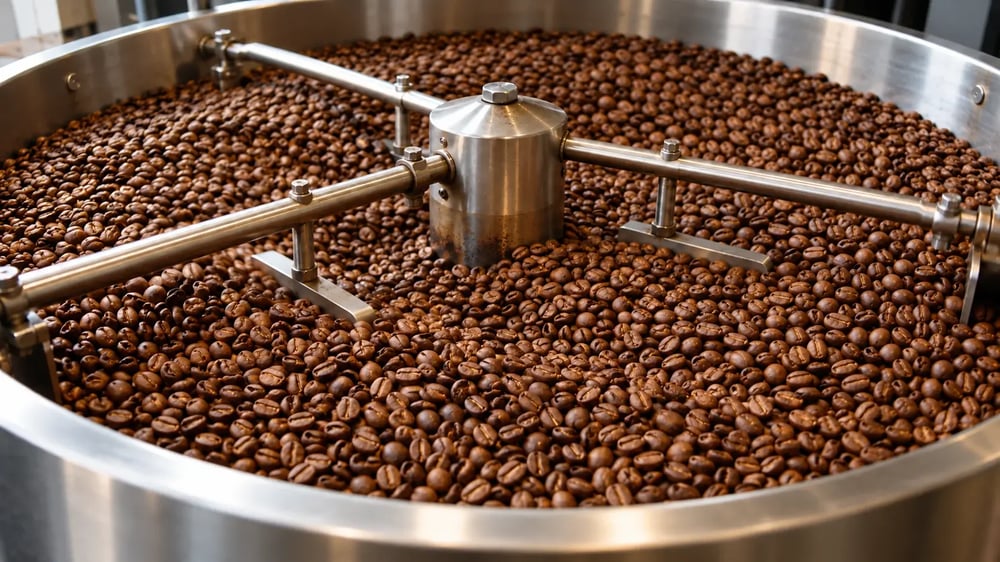
Coffee is both a daily ritual and a major global commodity. How people drink it, where it is produced and what consumers expect from it are changing, with implications across the global coffee value chain.
189.7M
60kg bags
Global coffee production forecast for 2026/27
179.7M
60kg bags
Global coffee consumption forecast for 2026/27
131.4M
60kg bags
Global coffee bean exports forecast for 2026/27
Source: USDA Foreign Agricultural Service, Coffee: World Markets and Trade, July 2026
USDA forecasts record global production, consumption and bean exports for 2026/27, underlining the scale of a market that continues to grow even as production risks and trade patterns change.
Coffee culture refers broadly to the habits, preferences and social practices around how coffee is prepared, purchased and consumed. Increasingly, those preferences are influencing what is produced, how it is sourced and how coffee moves through global markets.
From specialty coffee and new brewing styles to climate pressures, changing trade corridors and digital tools, here are seven trends worth watching.
1. Coffee is becoming more than a daily ritual
Coffee culture is becoming more diverse and specialised. Consumers have more choice in how coffee is prepared, where it comes from and the experience that surrounds it.
Specialty coffee provides one indication of that shift. In the United States, 47% of adults surveyed in 2026 said they had consumed specialty coffee in the previous day, compared with 42% for traditional coffee.
Regional styles are also reaching wider audiences. DMCC's Future of Trade: Special Coffee Edition highlights demand for styles such as Vietnamese and Turkish coffee, alongside premium brewing equipment, specialty pods and high-end capsules.
The result is a market in which coffee is increasingly differentiated by quality, preparation, origin and experience rather than treated as a single mass-market product.
2. Specialty coffee is raising expectations
As interest in specialty coffee grows, consumers are paying closer attention to freshness, origin and quality.
Consumers are also paying greater attention to how coffee is sourced and produced. DMCC's 2025 Coffee report points to growing consumer interest in ethically and organically sourced coffee, alongside greater attention to certification and sustainable production practices.
For producers, traders and roasters, this means quality is no longer only about what is in the cup. Sourcing, traceability and production practices are becoming more visible parts of the commercial proposition.
3. Producing countries are capturing more value
Coffee-producing countries have traditionally exported a significant share of their crop as green beans, with more value added through roasting, branding and retail closer to consumer markets.
That model is becoming less one-directional.
DMCC's Special Coffee Edition points to greater emphasis on domestic consumption, local roasting and branding in producing markets as ways to retain more economic value closer to origin.
This coffee-specific change sits within a much wider shift in trade. DMCC's Future of Trade 2026: Rebuilding Through Rupture finds that South-South trade between developing economies now accounts for 35% of global trade, with regional agreements and deeper commercial links reinforcing trade between markets across Africa, South Asia, Southeast Asia and the Middle East.
For coffee, this wider trade shift provides context for the growth of new producer-to-consumer relationships and demand beyond long-established markets. It also raises a practical question for businesses: which trade corridors are becoming commercially relevant to their part of the coffee value chain?
4. Climate and concentrated supply are changing risk
Coffee production is highly sensitive to weather. Drought, heat, frost and excessive rainfall can affect yields, disrupt supply and influence prices.
The exposure is amplified by the concentration of global production. Food and Agriculture Organization of the United Nations (FAO) reported in 2026 that Brazil and Vietnam together account for nearly half of global coffee production, while five countries supply around 65% of total coffee exports. FAO notes that this concentration can make global markets particularly sensitive to localised shocks.
Climate conditions are adding another layer of risk. A 2026 RaboResearch assessment found that 8% of current Arabica-growing areas are already classified as climatically unsuitable, with that share projected to rise to 20% by 2050. The impact is not uniform, with some regions facing greater pressure while suitability may increase elsewhere.
This is putting more attention on approaches such as agroforestry, more resilient coffee varieties and changes in where coffee is sourced. DMCC's Coffee report identifies agroforestry and drought-resistant varieties among the approaches being considered across the sector.
The issue also reflects a wider trade trend. Future of Trade 2026 finds that businesses across sectors are treating supply-chain diversification as a standing requirement rather than a response to individual disruptions.
For coffee businesses, resilience increasingly means understanding not only price and quality, but also where supply is concentrated and how exposed those origins are to climate and logistical disruption.
5. Dubai is strengthening its role in coffee trade
Dubai's coffee culture is expanding alongside its role in commodities and international trade.
That role is supported by the UAE's wider position as a commodity hub. The UAE ranks second in the DMCC Commodity Trade Index 2026, which assesses ten major commodity trading hubs across factors including proximity to markets, financial services infrastructure, strength of regulatory enforcement and logistics performance. Coffee is among the commodities included in the Index's assessment of global commodity trade.
Dubai's specialty coffee sector is also attracting growing international participation. World of Coffee Dubai 2026 recorded more than 20,000 visits from industry professionals across over 80 countries, with more than 2,100 companies and brands from 78 countries participating.
Together, these factors give Dubai relevance at both ends of the coffee story: as a consumer market with an active specialty coffee culture and as a location serving businesses involved in sourcing, processing, distribution and trade.
6. Coffee needs infrastructure as much as culture
Demand alone does not move coffee from producer to consumer. Trade depends on the physical and financial infrastructure needed to store, process, finance and distribute it.
In 2025, the DMCC Coffee Centre handled more than 8,200 metric tonnes of coffee and grew to more than 300 active member companies.
The 15,000 sqm temperature-controlled facility provides services including warehousing, green coffee processing, roasting, packaging, logistics and training, allowing businesses to access multiple parts of the coffee value chain from one facility.
Financial infrastructure matters too. DMCC Tradeflow enables commodities including coffee stored in approved UAE facilities to be registered digitally. Electronic warehouse warrants can then be used to support inventory financing, including by pledging stored commodities as collateral to financial institutions.
That connection between physical handling and financing is particularly relevant in a market where inventory, working capital and price movements can all affect how efficiently coffee moves through the supply chain.
7. Digital tools are changing how coffee is traded
Technology is also changing how businesses manage information and transactions across the coffee value chain.
DMCC's Special Coffee Edition identifies digital marketplaces, blockchain-based traceability systems and AI monitoring technologies among the tools with potential to improve transactions, traceability and visibility from producer to consumer.
Their role should not be overstated. These technologies do not remove the underlying challenges around quality verification, logistics, financing or supply risk. But they can provide businesses with additional ways to track products, share information and manage parts of the trading process.
This is consistent with the wider direction identified in Future of Trade 2026, which describes global trade as becoming more digital while businesses simultaneously place greater emphasis on resilience and diversified supply networks.
For the coffee industry, the value of digital tools will ultimately depend on how effectively they connect with the physical infrastructure, standards and commercial relationships that trade still relies on.
What these shifts mean for global coffee trade
Coffee culture may begin with how people experience coffee, but its effects extend across the wider value chain.
Changes in consumer preferences are influencing what coffee is produced and how it is marketed. Producing countries are looking to retain more value. Climate and concentrated supply are changing how businesses assess risk. New trade corridors are connecting markets differently, while physical, financial and digital infrastructure are changing how coffee moves between them.
For Dubai, the opportunity is grounded in these practical connections. Through the DMCC Coffee Centre, businesses can access storage, processing, roasting, packaging, logistics and training, while DMCC's wider commodity infrastructure supports trade and financing.
The global coffee market may still begin with the bean and end with the cup. What happens between the two is becoming a more important part of the commercial story.



.jpg?width=600&name=design.oxygen_Hyperrealistic_professional_photography_wide_sh_62ed0d0a-3916-487f-9a33-329553e4a5b8_2%201%20(2).jpg)