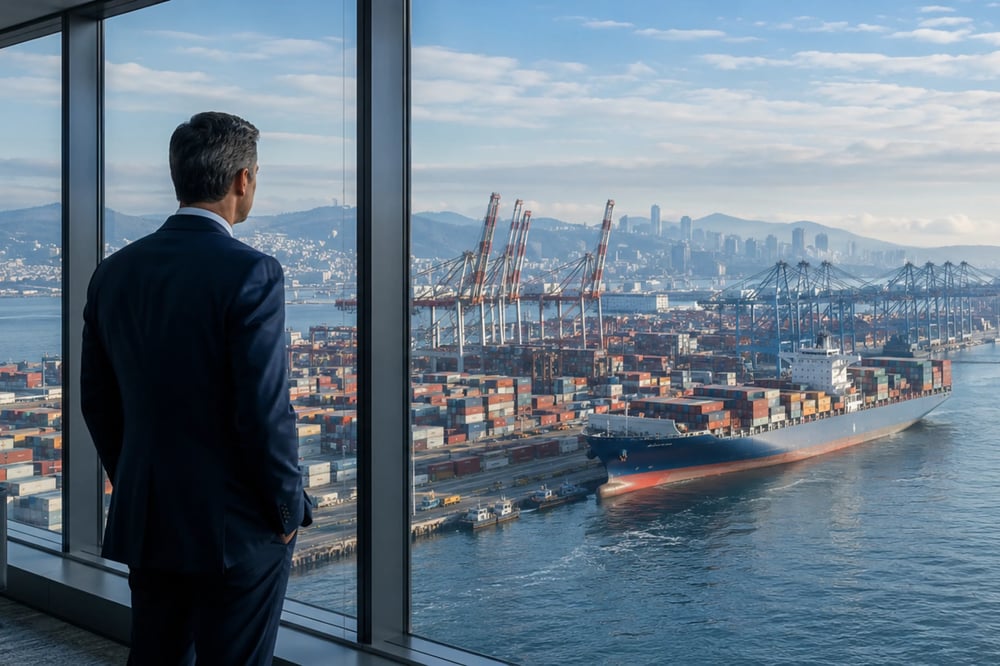
Trade disruption is now part of business planning
For years, companies treated disruption as something to manage until conditions stabilised. A supply chain shock, tariff dispute, conflict or inflationary period was viewed as a temporary challenge, followed by a return to more predictable trading conditions.
But the findings of DMCC’s Future of Trade 2026 report suggest this assumption is changing. Based on the expectations of business leaders and trade experts, disruption is increasingly being treated not as a temporary challenge, but as a condition businesses must plan for.
Source: DMCC Future of Trade Survey, 2026
So, the question is:
If disruption is becoming part of the operating environment, how are businesses changing the way they plan, invest, and grow?
Trade is still expected to grow, but growth will be more selective
Business leaders are becoming more selective about where they invest, which markets they prioritise and how they structure supply chains.
The report’s broader trade outlook supports this. Global merchandise trade is forecast to grow by 1.9% in 2026, before recovering to 2.6% in 2027. However, much of the recent growth has been concentrated in AI-related goods. These goods represented only 15% of global trade by volume but contributed 43% of trade growth in the first half of 2025.
This means businesses may increasingly look towards:
- high-growth sectors such as AI infrastructure, digital services and technology
- emerging and regional trade corridors
- markets with stronger demand or more favourable trade relationships
- locations that provide access to multiple regions rather than a single market
This is also why globally connected business hubs are becoming more attractive. Through DMCC, companies can establish a presence in Dubai while gaining access to international markets across the Middle East, Africa, Asia and Europe, supported by a community of more than 26,000 businesses and sector-focused ecosystems.
Policy uncertainty is becoming harder to manage than weak demand
Half of respondents identify tariffs and protectionist measures as the biggest constraint on trade growth, compared with 15% citing weak demand and macroeconomic conditions and 15% citing cost pressures.
The key insight is:
Businesses can forecast demand, model inflation, and adjust prices. Sudden changes in tariffs, export controls or market-access rules are harder to anticipate and can quickly change the economics of an entire trade route.
This affects practical business decisions, including:
- whether to source from one country or multiple countries
- where to locate production
- whether to absorb tariff costs or pass them to customers
- which markets to prioritise
- how much inventory to hold
- how quickly suppliers can be switched if trade rules change
Businesses should move beyond static tariff assessments and maintain live exposure models across major trade corridors, with pre-agreed response plans for changes in rates, trade instruments or political relationships.
Geopolitical risk is now influencing where businesses source, invest and sell
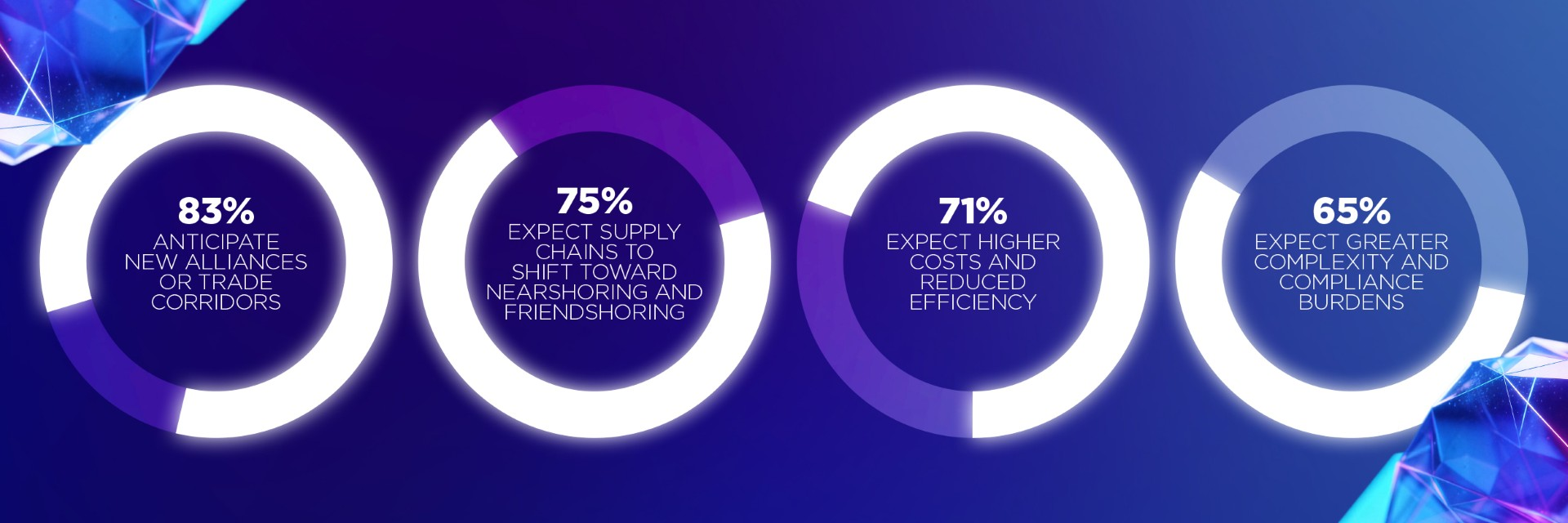
More than 98% of FOT survey respondents view geopolitical tensions as a major or moderate factor in reshaping trade flows over the next one to three years.
Steve Okun, Founder and CEO of APAC Advisors, highlights it may go well beyond those years too.
These figures show that geopolitics is influencing many areas of business planning - from market selection and logistics to redesigning supply chains and investing in politically stable locations.
Source: DMCC Future of Trade Survey, 2026
Businesses are responding, but adaptation is uneven
Given this ‘new normal’, what are companies actually doing? DMCC’s Future of Trade 2026 report identifies three leading responses:
1. Accelerating digitalisation
This includes investing in digital tools that improve supply chain visibility, demand forecasting, customs processes, trade documentation, and risk monitoring.
2. Strengthening compliance, sanctions screening and due diligence
Businesses are investing more in understanding who they trade with, where products and components originate, and whether transactions are exposed to sanctions, export controls or changing regulations.
3. Building supply chain resilience through diversified sourcing
Companies are testing capacity in other markets and moving towards more diversified sourcing models. They are not leaving established manufacturing centres, but reducing the operational impact of disruption in any one country.
What concrete actions has your organisation taken, or is planning to take, in response to geopolitical risk?
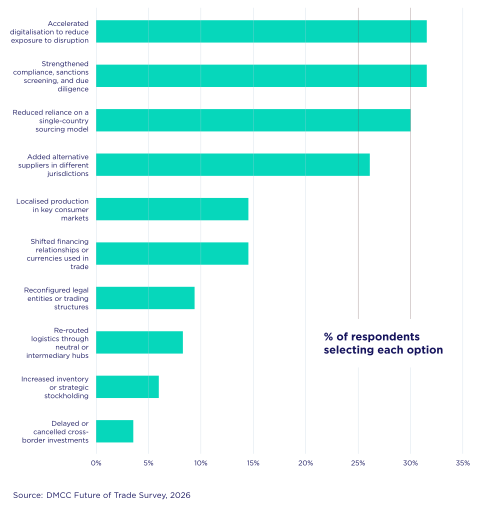
The most important additional finding is that around one-quarter of organisations report making no material changes.
What business leaders must do now
Rather than attempting to predict every future disruption, businesses should build the ability to respond across key areas:
Build resilience into everyday operations
Regularly test how tariffs, sanctions, shipping disruptions and energy price changes could affect operations.
Use technology to reduce trade friction
Identify trade processes where AI and digital tools can deliver measurable value, including forecasting, customs, compliance, documentation, logistics, and risk management.
Treat data as a trade asset
Businesses should improve data quality and interoperability and assess exposure to data localisation requirements before entering new markets.
Build greater flexibility into finance and payments
Explore digital payment and settlement tools in markets where they can improve speed, cost, or liquidity. This is particularly relevant where traditional trade finance is limited or documentation remains highly manual.
Diversify markets, partnerships and supply chains
Businesses should avoid viewing diversification only as a sourcing strategy. Resilience can also come from:
- access to multiple markets
- stronger relationships with regional partners
- alternative logistics routes
- sector-focused business ecosystems
- locations that provide connectivity across several trade corridors
This is also where DMCC adds value. Through DMCC, companies can use Dubai as a strategic base to access multiple markets, build relationships across sectors and regions, and strengthen resilience in an increasingly fragmented trade environment.
Preparation is replacing prediction
Trade will continue to create growth opportunities, but businesses are no longer assuming that growth will take place within a stable or predictable operating environment.
The companies best prepared for the next phase of trade will be those that build flexibility before they need it, using diversified supply networks, stronger compliance, digital capabilities and connected business ecosystems to continue operating through uncertainty.






.jpg?width=600&name=design.oxygen_Hyperrealistic_professional_photography_wide_sh_62ed0d0a-3916-487f-9a33-329553e4a5b8_2%201%20(2).jpg)