What is South-South trade?
It refers broadly to trade between developing economies.
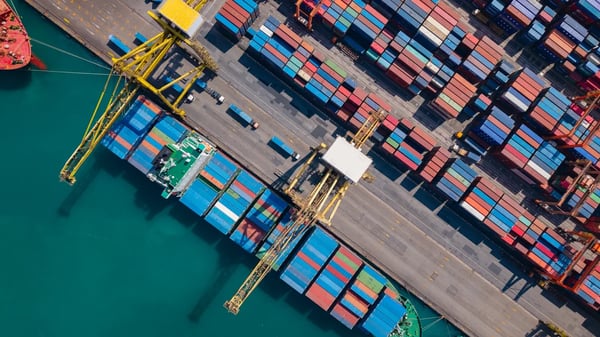
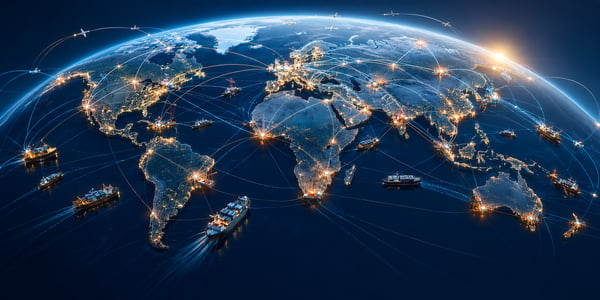
Global trade has historically been shaped by flows between major developed economies and the manufacturing centres that supplied them. However, with trade becoming more fragmented and businesses looking beyond traditional markets, a growing share of global commerce is now taking place between developing economies themselves.
DMCC’s Future of Trade 2026 report puts this shift into perspective: South-South trade now accounts for around 35% of global trade, compared with around 25% for North-North trade.
This is more than a change in trade volumes. It signals a change in where businesses are finding demand, building supply chains and forming new commercial relationships.
Why South-South trade is growing
Regional frameworks, tariffs and geopolitical uncertainty
South-South trade networks have proved resilient to shocks, with the report noting that growth has often outpaced the global average even amid rising geopolitical tensions.
Trade between developing economies reflects deeper economic integration across Asia, Africa, the Middle East and Latin America, with intra-regional trade in Asia playing a particularly important role.
Regional frameworks are reinforcing these connections. Agreements such as RCEP in Asia and AfCFTA in Africa are lowering barriers and strengthening regional trade networks.
At the same time, businesses are looking to diversify their exposure. Supply chain disruption, tariffs and geopolitical uncertainty have made dependence on a single market or trade route harder to justify.
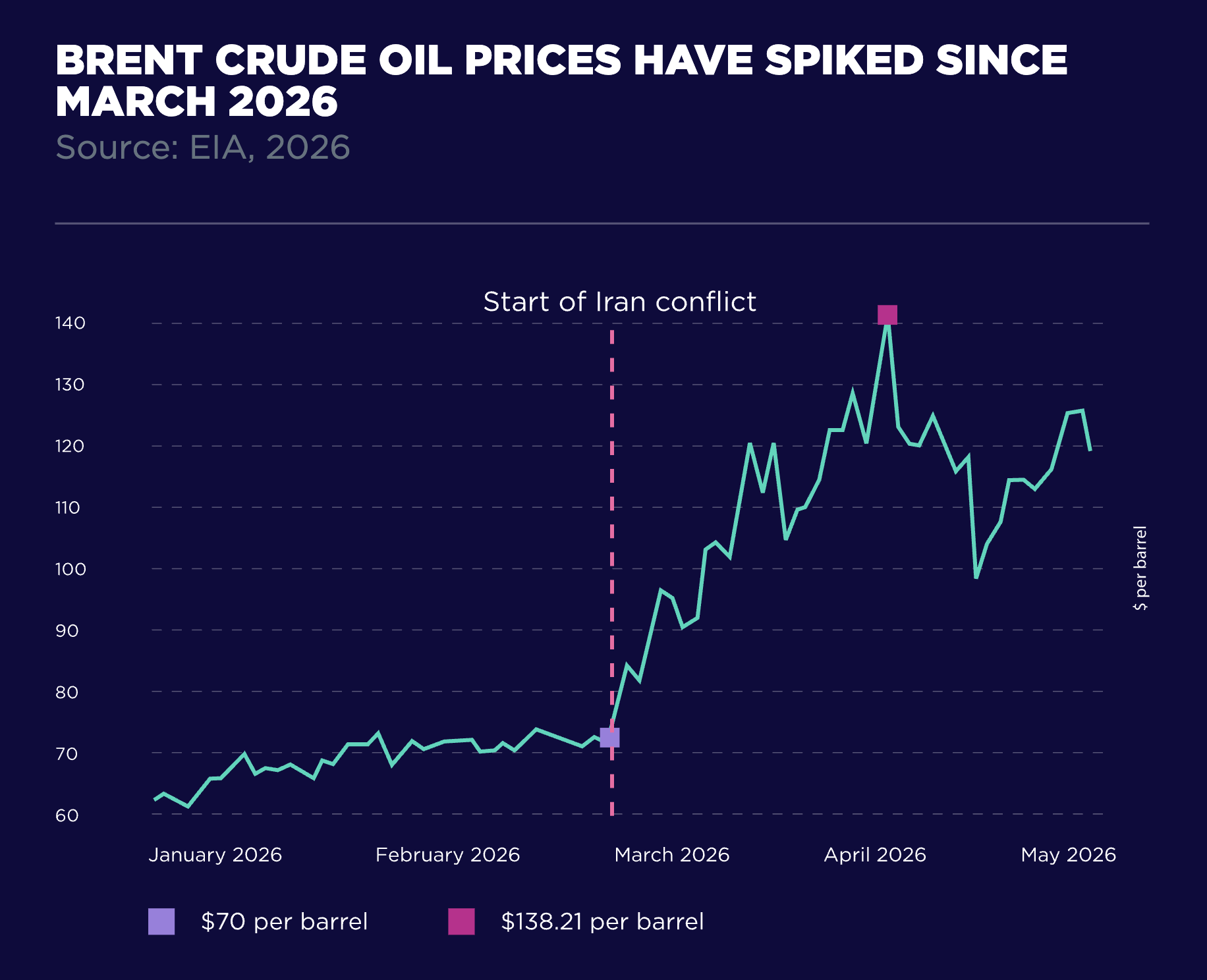
Disruptions to major trade routes, including the Strait of Hormuz, have highlighted the risks of geographic concentration. For businesses, this reinforces the importance of diversified sourcing, alternative routes and stronger commercial relationships across markets.
Source: DMCC Future of Trade Survey, 2026
That makes the wider range of markets and commercial relationships developing through South-South trade increasingly relevant when businesses assess where to source, sell and invest.
“Security will become far more important than efficiency. That will raise the working capital requirements for businesses.”
Dr. V. Anantha Nageswaran, Chief Economic Advisor to the Government of India
This is one reason why South-South trade matters. As businesses reassess where and how they trade, developing economies are becoming increasingly important not only as sources of supply, but as markets, investment destinations and strategic partners.
Middle powers are becoming the connectors
This is where the rise of middle powers becomes important.
The Future of Trade 2026 report identifies India, Singapore and the UAE as prominent examples of economies positioning themselves between competing trading systems. Their role is supported not only by geography, but by infrastructure, logistics, financial connectivity and trade relationships across different markets.
The UAE is a strong example. Its location between major markets across Asia, Africa, Europe and the Middle East places it across several important trade corridors.
Despite the disruption caused by the Iran conflict and the closure of the Strait of Hormuz, the UAE retained second place in the DMCC Commodity Trade Index 2026, with an index score of 47%.
The significance is not simply the ranking. In a more fragmented trading environment, businesses increasingly need to assess locations based on their connections across multiple markets rather than access to one market alone.
Through DMCC, companies can connect with a community of more than 26,000 member companies from over 180 countries, alongside sector-focused ecosystems and international business networks.
As South-South trade expands, these connections become increasingly important because commercial activity is becoming more distributed across a wider range of markets and corridors.
Supply chains are becoming more diversified and multi-nodal
Multinationals began adopting China + 1 strategies in the 2010s, accelerating during the first U.S.-China trade war as elevated tariffs exposed the dangers of over-dependence on a single manufacturing base. The report argues that these changes are reshaping global trade flows in ways likely to outlast individual tariff regimes or geopolitical flashpoints.
23%
Said their supply chains today are more regionalised and resilience-driven than 5 years ago
Source: DMCC Future of Trade Survey, 2026
45%
Said they have engaged in onshoring, nearshoring or friendshoring in recent years
Source: ACCA global poll, as cited in DMCC Future of Trade 2026
These are not marginal adjustments. They represent a fundamental shift in where production happens and why.
For South-South trade, this matters because a wider range of developing economies are becoming part of production, sourcing and investment networks.
What South-South trade means for businesses
The rise of South-South trade does not mean businesses should turn away from established markets. It means they need to broaden the way they assess growth.
The Future of Trade 2026 report recommends identifying the two or three South-South corridors most relevant to a company’s sector, assessing the regulatory and logistical barriers to entry and beginning to build the local relationships and market intelligence required to operate effectively.
For businesses, that means looking more closely at:
New demand centres
Identifying where consumer demand and business investment are growing across Asia, Africa, the Middle East and Latin America.
Alternative production hubs
Assessing emerging manufacturing locations not simply on cost, but on infrastructure, skills, logistics and market access.
Regional partnerships
Building relationships with suppliers, distributors, investors and service providers within emerging trade corridors.
Multiple routes to market
Reducing dependence on a single country, port or trade corridor.
The priority is not simply to move quickly into one new market, but to build the flexibility to operate across several relevant markets without replacing one concentration risk with another.
A more connected South-South trade map
South-South trade is gaining momentum because the fundamentals are changing.
Production is diversifying. Regional demand is growing. New trade agreements are creating stronger connections, while geopolitical and supply chain risks are making businesses more deliberate about where they source, invest and sell.
The result is not a less global trading system, but a more distributed one.
For business leaders, the practical question now is which South-South corridors matter to their sector and what market knowledge, partnerships and infrastructure are required to operate across them.