If you speak to any media business today, the conversation is no longer just about content. It is about platforms, distribution, data, and how quickly that content can scale across them.
Across MENA, content is now created, distributed, and monetised through platforms, streaming services, gaming ecosystems, and data-driven advertising models. Traditional structures built around standalone channels are being replaced by integrated, technology-led systems.
This shift is already visible in the numbers. The MENA media and entertainment market is projected to exceed USD 80–90 billion, driven by digital consumption, streaming, gaming, and content creation.
As a result, media and technology no longer function as separate industries. They now operate within the same value chain, influencing how media and entertainment businesses build, distribute, and grow.
What is driving the convergence of media and technology?
Media consumption is now platform-led, not channel-led
Audience behaviour across MENA is structured around constant digital access rather than scheduled media formats.
In the UAE, internet penetration stands at approximately 99%, creating a fully connected audience base. Users move between platforms, formats, and devices throughout the day, with social media, streaming, and short-form video forming the core of daily consumption.
Average daily internet usage in the UAE exceeds eight hours, with a significant share spent on social and video platforms.
For media businesses, this creates a structural shift. Content can no longer be produced for a single channel and adapted later. It needs to be built for multi-platform distribution from the outset, with formats, timing, and delivery being decided by how audiences consume content in real time.
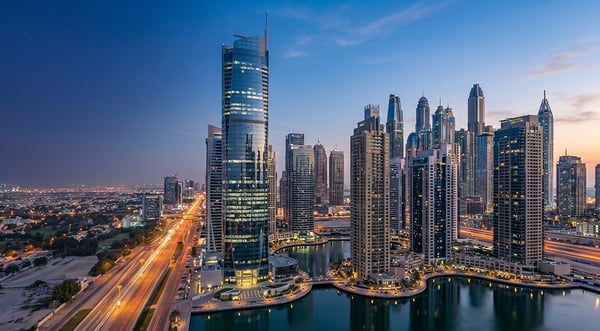
This is where operating environment becomes important. In markets like Dubai, media companies are increasingly positioned within digitally connected business districts such as DMCC, where access to platform-driven businesses, talent, and infrastructure support faster adaptation to multi-channel distribution models.
Growth is shifting toward streaming, gaming, and interactive formats
Streaming platforms and OTT services continue to expand as audiences move toward on-demand consumption. At the same time, gaming and interactive media are among the fastest-growing segments in MENA, supported by a young, mobile-first population and strong digital infrastructure.
UAE residents spend an average of 1.5 hours daily on gaming.
This growth is also extending into newer formats such as podcasting, creator-led content, and influencer-driven media, where individuals and small teams are building scalable audiences across platforms.
This changes how content is developed. Media is no longer limited to static formats. It now sits within interactive environments and platform-based experiences that require deeper integration with technology.
For many businesses, this creates a capability gap. Content production and technical infrastructure are often developed separately, making it harder to scale newer formats efficiently.
In practice, environments that bring media and technology companies together reduce this gap. Within DMCC, for example, media companies operate alongside a base of 4,000+ companies across its dedicated technology centres, including the DMCC Crypto Centre, DMCC Gaming Centre, and DMCC AI Centre.
Alongside this, DMCC also supports newer models such as podcast studios, creator-led ventures, and digital-first platforms. This makes it easier to access the tools, partnerships, and technical capabilities required to build and distribute content across emerging formats.
Digital advertising is now the core revenue model
The GCC advertising market is estimated at USD 6–7 billion, with digital now accounting for over 50% of spend, as brands shift budgets toward measurable, data-driven channels.
For media companies, this introduces a different operating requirement. Content must be measurable, adaptable, and optimised across multiple platforms, often in real time.
Operating within a business district that includes both media and technology companies allows for stronger alignment between content creation and data-led monetisation. In DMCC, this proximity supports faster collaboration between media businesses and companies working across analytics, advertising technologies, and digital platforms.
What this means for the next generation of media companies
The next generation of media companies is defined less by format and more by structure.
Content is developed for multiple platforms from the outset. Distribution is platform-led. Revenue depends on data and performance. Technology is embedded into every stage of the process.
Business environments that combine these elements are becoming central to how media companies grow.
DMCC reflects this structure in practice, with over 900 media and creative companies operating alongside more than 4,000 technology companies across AI, gaming, and digital sectors. Companies building content within DMCC, can work directly alongside companies building the technologies that support:
-
Distribution across platforms
-
AI-driven content workflows
-
Gaming and interactive media environments
-
Data-led advertising models
-
Emerging formats such as Web3 and crypto
As media and technology continue to converge, this type of operating model is likely to rule the industry evolution in the region.


-1.jpg?width=600&name=Business-Opportunities-3-3-(1)-1.jpg)
.jpg?width=600&name=design.oxygen_Hyperrealistic_professional_photography_wide_sh_62ed0d0a-3916-487f-9a33-329553e4a5b8_2%201%20(2).jpg)