The global economy is entering a new phase of industrial transformation, driven by electrification, artificial intelligence, advanced technologies, and the transition toward lower-emission energy systems.
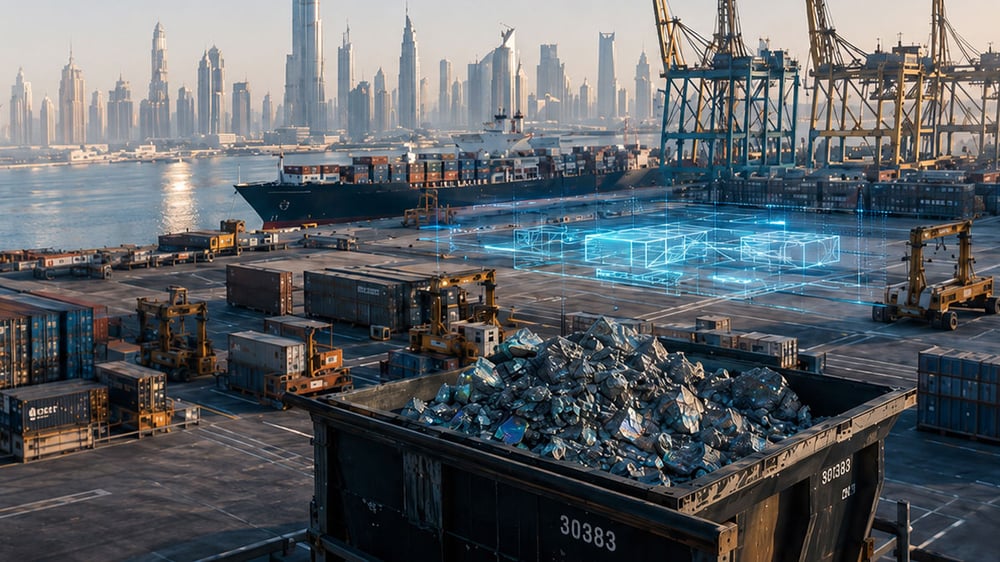
As this shift accelerates, demand for minerals such as lithium, cobalt, copper, rare earths, aluminium, and graphite continues to rise.
According to the International Energy Agency’s Global Critical Minerals Outlook 2025, despite a surge in investment, the supply-side complexities of the minerals market are intensifying. This is creating renewed focus on how critical minerals are sourced, traded, financed, processed, and distributed globally.
For DMCC, the growing importance of this sector became increasingly evident during discussions at the high-level Workshop on Natural Resource Governance held in Gaborone, Botswana in October 2025. The discussions highlighted that the future of the sector will require more than additional mining capacity alone. Increasingly, the market will depend on transparent trade infrastructure, stronger governance frameworks, and globally connected commercial hubs capable of supporting the movement, financing, and verification of critical minerals across international markets.
This reinforced DMCC’s interest in exploring how Dubai’s existing commodities, trade, and financial infrastructure could support the evolving needs of the global critical minerals sector, positioning the emirate as a neutral and globally connected facilitator within this rapidly developing market.
Advanced technologies are key reasons for mineral demand
The growing urgency around critical minerals is being driven by the rapid expansion of advanced technologies, from the rising power requirements of AI-driven data centres to the global rollout of electric vehicles and large-scale electrification infrastructure.
As a result, the list of minerals considered strategically important continues to expand. Beyond lithium and cobalt, metals such as aluminium, critical for lightweighting and power grids, and copper are becoming increasingly central to strategic planning.
This shift is also changing how governments, industries, and trade hubs approach long-term supply resilience, financing, and market access for critical minerals.
Copper, in particular, is projected to face a potential 30% supply shortfall by 2035 as demand accelerates across data centres, electrification infrastructure, cooling systems, and power distribution networks.
How Dubai and DMCC are positioning for the next phase of critical minerals trade
Building on existing commodities and trade infrastructure
DMCC’s approach to the critical minerals sector builds on infrastructure and frameworks already established across global commodities trade. Rather than developing entirely new systems, the focus is on how existing trade, financing, and governance capabilities can be adapted to support the evolving requirements of the critical minerals market.
The UAE Good Delivery Standard, established in 2005, provides an existing benchmark for independent, quality-driven standards development. Alongside this, its OECD Responsible Sourcing Protocol, audited by international firms including SGS and Bureau Veritas, already supports responsible sourcing and due diligence frameworks across commodities trade.
DMCC is also exploring how existing chain-of-custody and assurance mechanisms developed through frameworks such as the Kimberley Process and System of Warranties could inform future approaches to transparency and mineral traceability.
Expanding trade finance and digital infrastructure for minerals markets
As critical minerals markets mature, financing, warehousing, inventory verification, and digital trade infrastructure are expected to become increasingly important to global supply chains.
Within this context, the DMCC Tradeflow platform is already being configured to support future mineral inventory financing, warehouse warrants, and pre-export trade finance linked to critical minerals flows.
At the same time, the integration of Tradeflow infrastructure with emerging digital finance capabilities, including DMCC FinX and Dubai’s virtual assets regulatory framework under VARA, creates potential for future tokenised trade and inventory models linked to critical minerals assets.
This reflects a broader shift in how commodities markets are becoming increasingly digitised, transparent, and data-led.
Dubai’s role as a neutral and globally connected trade hub
As supply chains become more concentrated and geopolitically sensitive, globally connected trade hubs are likely to play a larger role in supporting resilience across critical minerals markets.
Dubai’s position as a neutral, high-volume trading hub provides strategic advantages for markets seeking diversified trade routes, financing access, and international connectivity.
Within this environment, DMCC’s broader commodities ecosystem positions Dubai to support the movement of minerals ranging from lithium and cobalt to rare earths, silver, and potash through internationally connected trade infrastructure and transparent commercial frameworks.
Addressing transparency and supply chain verification
Transparency and traceability are becoming increasingly important across critical minerals markets as governments, investors, and industries place greater emphasis on responsible sourcing and independently verifiable supply chains.
Recent governance reviews across the sector, including the Sicomines audit in the Democratic Republic of the Congo, have reinforced the importance of stronger accountability frameworks and chain-of-custody standards.
Within this context, DMCC is exploring the potential development of a Dubai Critical Minerals Standard (DCMS) designed around OECD-aligned due diligence, independent certification, and enhanced supply chain verification mechanisms.
This could include digitally supported monitoring systems, traceability infrastructure, and tiered certification models aimed at improving confidence across mineral trade flows.
Exploring alternative refining and distribution capabilities
According to the IEA, China currently accounts for 70-90% of global refining capacity for essential minerals like cobalt and rare earths.
As industries seek to diversify supply chains, alternative refining and processing hubs are becoming increasingly important.
Within this evolving landscape, DMCC is exploring the feasibility of future processing and distribution capabilities linked to minerals such as lithium hydroxide and cobalt sulphate, leveraging Dubai’s logistics network, infrastructure, and global market connectivity.
This reflects wider international efforts to reduce concentration risk and support more geographically diversified supply chains across the critical minerals sector.
What this means for the future of critical minerals trade
As governments and industries rethink supply chain resilience, critical minerals are increasingly being treated as a strategic asset class rather than a traditional commodity market. This is creating demand for more transparent, regulated, and institutionally supported trading environments.
As this energy transition accelerates, the future of mineral trade will increasingly depend on hubs that can balance speed, transparency, and international trust, areas where Dubai is already well positioned.



-1.jpg?width=600&name=Business-Opportunities-3-3-(1)-1.jpg)

.jpg?width=600&name=design.oxygen_Hyperrealistic_professional_photography_wide_sh_62ed0d0a-3916-487f-9a33-329553e4a5b8_2%201%20(2).jpg)